


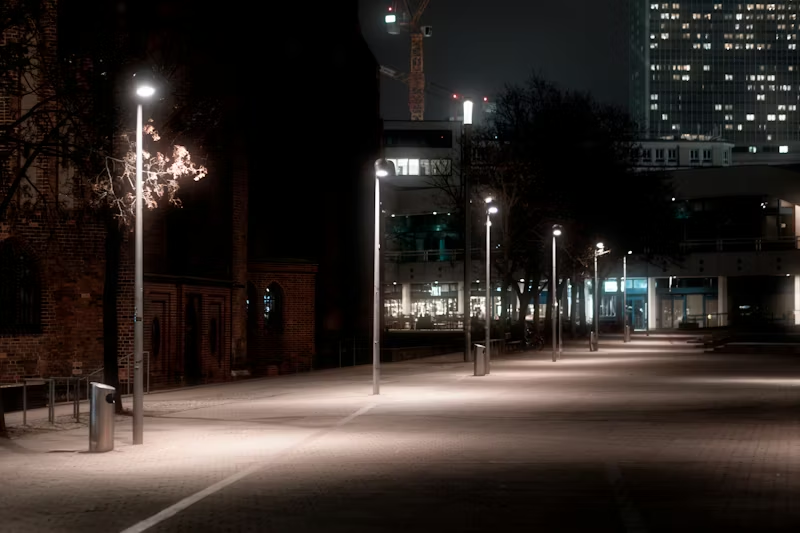








Self Cleaning Street Lamp Research Dust Resistant Lamp Project Exist
Introduction to Self-Cleaning Street Lamps
In contemporary urban development, the idea of a self cleaning street lamp research dust resistant lamp project exist has acquired a lot of support. Pollution, dust buildup, and the expense of maintaining conventional street lighting systems are becoming major problems for cities all over the world.
Street lights are essential to urban infrastructure and public safety. Dust accumulation on lamp surfaces, however, lowers illumination efficiency, resulting in weak lighting and increased energy use. Dust-resistant and self-cleaning technologies are useful in this situation.
To put it simply, a self-cleaning street lamp is made to automatically clear its surface of dust, dirt, and debris without the need for human involvement. To sustain peak performance, these systems make use of cutting-edge materials, coatings, and intelligent technology.
Importance of Dust-Resistant Lighting Systems
Dust is more than just an aesthetic issue—it directly affects performance. In regions with high pollution or desert climates, street lamps can lose up to 40% of their brightness due to dust accumulation.
Key reasons why dust-resistant systems matter:
- Maintains consistent illumination
- Reduces maintenance frequency
- Improves energy efficiency
- Enhances public safety
Moreover, governments and municipalities are now focusing on sustainable infrastructure. A self cleaning street lamp research dust resistant lamp project exist aligns perfectly with smart city initiatives.
How Self-Cleaning Street Lamps Work
Understanding the working principle is essential, especially for engineering students or researchers working on such projects.
Hydrophobic Coatings
These coatings repel water and dust. When rain falls, it carries away accumulated particles, effectively cleaning the surface.
Key Features:
- Water-repellent surface
- Low maintenance
- Long-lasting protection
Electrostatic Dust Removal
This method uses electric fields to repel dust particles from the lamp surface.
How it works:
- A low-voltage charge is applied
- Dust particles are pushed away
- Surface remains clean
Mechanical Cleaning Systems
Some advanced systems include:
- Rotating brushes
- Wipers (similar to car windshield wipers)
These are typically used in areas with heavy dust exposure.
Key Components of Dust Resistant Lamp Projects
A successful self cleaning street lamp research dust resistant lamp project exist requires integration of multiple components.
Smart Sensors
Sensors detect:
- Dust levels
- Light intensity
- Environmental conditions
They trigger cleaning mechanisms automatically.
Solar Integration
Solar panels are often used to power these systems, making them energy-efficient.
Advantages:
- Renewable energy source
- Cost-saving in the long run
- Suitable for remote areas
IoT Connectivity
Internet of Things (IoT) enables remote monitoring and control.
- Real-time data tracking
- Fault detection
- Automated maintenance alerts
Benefits of Self Cleaning Street Lamp Research
Reduced Maintenance Costs
Manual cleaning is expensive and time-consuming. Self-cleaning systems significantly cut these costs.
Improved Light Efficiency
Clean surfaces ensure maximum light output, improving visibility on roads.
Environmental Benefits
- Lower energy consumption
- Reduced carbon footprint
- Supports sustainable urban development
Real-World Applications and Case Studies
Several cities have started implementing smart lighting systems.
Examples include:
- Smart highways with automated lighting
- Desert regions using dust-resistant lamps
- Industrial zones with high pollution levels
These implementations prove that the self cleaning street lamp research dust resistant lamp project exist is not just theoretical—it is practical and effective.
Design Considerations for Engineering Projects
When designing your own project, keep these factors in mind:
Material Selection
Choose materials that are:
- Corrosion-resistant
- Lightweight
- Durable
Power Management
Efficient energy use is critical:
- Use LED lights
- Integrate solar panels
- Optimize battery storage
Weather Resistance
Ensure the system can withstand:
- Rain
- Heat
- Wind
- Dust storms
Challenges in Implementation
Despite its advantages, there are challenges:
- High initial cost
- Complex system design
- Maintenance of electronic components
- Dependence on environmental conditions (e.g., rain for cleaning)
However, with technological advancements, these issues are gradually being resolved.
Future Trends in Smart Street Lighting
The future looks promising for smart lighting technologies.
Emerging trends:
- AI-based cleaning systems
- Fully autonomous smart poles
- Integration with smart city networks
- Energy harvesting technologies
The self cleaning street lamp research dust resistant lamp project exist will continue evolving, becoming more efficient and affordable.
Step-by-Step Guide to Building a Dust Resistant Lamp Project
Here’s a simple guide for students:
Step 1: Research and Planning
Understand requirements and select technology.
Step 2: Component Selection
- LED lamp
- Sensors
- Microcontroller (e.g., Arduino)
Step 3: Design Cleaning Mechanism
Choose:
- Coating
- Electrostatic system
- Mechanical wiper
Step 4: Power Setup
Integrate solar panel and battery.
Step 5: Testing
Test in dusty conditions and analyze performance.
Comparison Table: Traditional vs Self-Cleaning Lamps
FeatureTraditional LampSelf-Cleaning LampMaintenanceHighLowEfficiencyDecreases over timeConsistentCostLow initialHigher initialLifespanModerateLongerEnergy UseHigherLower
Frequently Asked Questions (FAQs)
1. What is a self-cleaning street lamp?
A self-cleaning street lamp automatically removes dust and dirt using advanced technologies like coatings or electrostatic systems.
2. Why is dust resistance important in street lamps?
Dust reduces light output and efficiency, making roads less safe.
3. Is this project suitable for final-year engineering students?
Yes, the self cleaning street lamp research dust resistant lamp project exist is an excellent and innovative final-year project.
4. What technologies are used in these systems?
Common technologies include hydrophobic coatings, sensors, IoT, and solar energy.
5. Are self-cleaning lamps expensive?
They have higher initial costs but save money in the long term due to reduced maintenance.
6. Can this system work without solar power?
Yes, but solar integration makes it more sustainable and cost-effective.
Conclusion
The self cleaning street lamp research dust resistant lamp project exist is a significant step toward more intelligent, hygienic, and effective urban infrastructure. Adopting such creative solutions is now necessary due to growing environmental concerns and urbanization.
Self-cleaning street lighting have many advantages, from lower maintenance costs to increased public safety. This technology makes innovation and sustainability possible for engineers, students, and city planners.
We can anticipate even more sophisticated and affordable solutions in the near future as research and technology advance.