





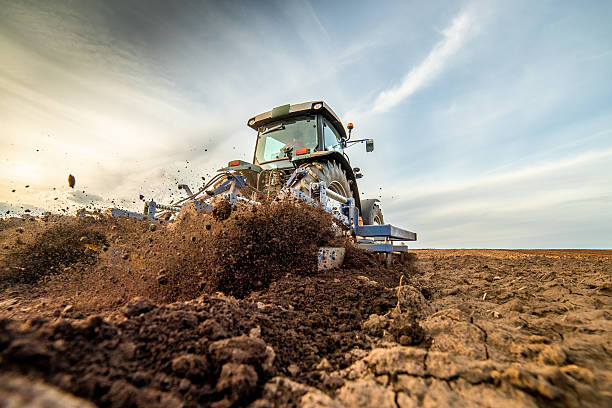





Agricultural Machinery Manufacturer: A Practical Guide to Modern Farm Equipment and Mechanized Agriculture
Modern agriculture depends on more than fertile soil, quality seeds, and favorable weather. The ability to prepare land efficiently, plant crops accurately, manage fields consistently, and harvest at the right time increasingly depends on reliable machinery. For farmers, agricultural contractors, distributors, and agribusinesses, choosing the right equipment can have a direct effect on productivity, labor requirements, operating costs, and the quality of farm operations.
An experienced agricultural machinery manufacturer plays an important role in this process by developing equipment designed for specific farming tasks and working environments. Modern manufacturers produce everything from tractors and planting equipment to harvesters, sprayers, and agricultural drones. The best equipment is not simply powerful; it should also be practical, maintainable, compatible with local farming conditions, and suitable for the crops being cultivated.
For buyers researching equipment from China, Gengjia Agri is an example of a manufacturer serving the international agricultural machinery market. Its product range includes tractors, harvesters, seeding equipment, sprayers, and agricultural UAVs. The company’s published information also describes in-house manufacturing, engineering, parts processing, inspection, and international delivery capabilities.
Understanding the Role of an Agricultural Machinery Manufacturer
The role of an agricultural machinery manufacturer extends far beyond assembling metal components into a working machine. A modern manufacturer has to understand agricultural operations and translate those requirements into mechanical systems that can work under demanding field conditions.
Agricultural equipment is exposed to dust, moisture, mud, vibration, changing temperatures, uneven terrain, crop residue, and long operating hours. Consequently, machinery needs appropriate materials, strong structural components, reliable power transmission, effective hydraulic systems, and practical maintenance access.
Manufacturers also have to consider differences between agricultural regions. A machine designed for a large commercial farm may not be suitable for small fields, while equipment developed for one crop may require different configurations for another. Soil conditions, field size, row spacing, crop density, terrain, climate, and available labor can all influence equipment selection.
This is why professional machinery manufacturing increasingly involves engineering, testing, quality control, product development, and customer support. A machine can look impressive in a product photograph, but its real value is determined by how effectively it performs the intended agricultural task.
Why Agricultural Mechanization Matters
Mechanization can help farms complete time-sensitive operations more efficiently. Planting, spraying, and harvesting are particularly dependent on timing. Delays during these stages can affect crop management and, ultimately, farm economics.
Tractors provide the power platform for many agricultural operations. They can pull or operate implements used for soil preparation, planting, fertilization, spraying, transportation, and other tasks. Depending on the farm, tractors may be used with different attachments throughout the production cycle.
Harvesters address another major challenge: collecting crops efficiently when they reach maturity. Manual harvesting can require substantial labor, particularly across large areas. Mechanized harvesting allows farms to process more acreage within a limited harvesting window.
Seeding equipment contributes to another important objective—placing seed consistently. Precision in seed spacing and depth can help establish more uniform crops. Modern planters and seeders may integrate additional functions such as fertilization or other field operations, depending on the machine design.
Spraying equipment is similarly important because crop protection depends on applying agricultural inputs appropriately. A well-designed sprayer should provide consistent coverage while allowing operators to control application parameters.
Agricultural drones add another technological layer. UAVs can be used for specific crop-management applications such as monitoring, mapping, or spraying where regulations, operating conditions, and equipment specifications permit.
Also Read: bongdalu + https://selefra.io/
Tractors: The Foundation of Farm Mechanization
For many agricultural operations, tractors remain the central power unit. A tractor can perform multiple jobs when paired with appropriate implements, making it one of the most versatile investments on a farm.
When evaluating tractors, buyers should consider horsepower, transmission, hydraulic capacity, PTO specifications, lifting capacity, fuel consumption, dimensions, tire configuration, operator comfort, and compatibility with existing implements.
The right horsepower depends on the intended workload. A small farm carrying out light-duty operations may not need a high-horsepower tractor, while large-scale cultivation or heavy tillage may justify substantially greater power.
A tractor should therefore be selected according to the complete farming system rather than horsepower alone. Purchasing more power than necessary can increase acquisition and operating costs, while insufficient power can limit productivity and cause excessive strain on machinery.
A capable agricultural machinery manufacturer should therefore offer different configurations to address different farm requirements. Product variety is particularly useful for international customers because agricultural practices vary significantly between countries and regions.
Harvesters and the Importance of Timely Crop Collection
Harvesting is one of the most time-sensitive stages of agricultural production. Once a crop reaches the appropriate maturity, farmers may have a limited period in which to collect it efficiently.
Modern harvesters combine several mechanical processes to reduce the number of separate operations required in the field. Depending on the crop and machine, these processes can include cutting, picking, threshing, separating, cleaning, conveying, and collecting.
Gengjia Agri’s published combine-harvester range includes equipment for crops such as corn, wheat, and potatoes, with different configurations intended for different field requirements.
For example, the company’s 4GJ-4F corn harvester is described as a self-propelled machine that combines ear picking, peeling, stalk crushing, and straw recycling in one operation.
This type of multi-function operation demonstrates an important trend in agricultural machinery: reducing unnecessary passes through the field. Combining several processes into one operation can potentially reduce time, labor requirements, fuel consumption, and field traffic.
Seeders and Planters for More Consistent Establishment
Crop establishment has a major influence on later field management. Uneven planting can result in inconsistent plant populations, while inaccurate planting depth or spacing may make crop management more difficult.
Modern seeders and planters are designed to improve the consistency of seed placement. Depending on the machine, features can include precision metering, adjustable row spacing, depth control, fertilizer application, and other integrated functions.
For specialized crops, dedicated planting machines can provide additional advantages. Gengjia Agri’s 2GJAX-4 potato planter, for example, is described as combining furrowing, planting, ridging, fertilizing, and spraying in a single pass, with seed metering and depth-control features.
For farmers, the practical lesson is that equipment should be evaluated based on the entire planting process rather than one specification. A machine capable of completing several compatible operations may be more useful than several individual machines when field conditions and crop requirements allow.
Spraying Equipment and Application Efficiency
Crop protection requires careful management. Spraying too little can result in inadequate coverage, while excessive application can increase costs and environmental risks. Consistency is therefore an important consideration when selecting a sprayer.
Boom sprayers are commonly used for broad-acre crops. They distribute liquid through multiple nozzles across a working width, allowing large areas to be treated efficiently.
A modern sprayer may include features such as hydraulic boom control, pressure regulation, segmented boom control, anti-drip nozzles, mixing systems, and tank-cleaning arrangements. Gengjia Agri’s published 3GJB-1500 boom sprayer, for example, is described as having a 1,500-liter tank, hydraulic boom functions, pressure stabilization, segmented control, and anti-drip components.
Farmers should nevertheless follow local agricultural regulations, pesticide labels, application instructions, and environmental requirements when using spraying equipment. Machinery improves application capability, but responsible chemical management remains essential.
Agricultural Drones and the Development of Precision Farming
Agricultural drones represent an important development in modern farm technology. Unlike conventional tractors and field equipment, UAVs can operate from above the crop canopy and provide a different perspective on agricultural conditions.
Depending on the equipment and applicable regulations, agricultural drones can support crop monitoring, field mapping, imaging, and certain spraying applications. Their usefulness can be particularly relevant where farmers need to inspect large areas quickly or identify variations within a field.
The value of a drone does not come solely from flight capability. Sensors, software, flight planning, battery management, payload capacity, navigation systems, and operator training all influence performance.
An agricultural machinery manufacturer that incorporates UAV technology into its broader product portfolio can therefore address both conventional mechanization and newer precision-agriculture requirements.
However, buyers should check aviation rules, agricultural application regulations, operator requirements, and local restrictions before purchasing or operating agricultural UAVs.
What Makes a Reliable China Farm Equipment Manufacturer?
International buyers often evaluate Chinese manufacturers because China has a substantial industrial base capable of producing different categories of agricultural equipment. However, country of origin alone should never be treated as a guarantee of quality.
When comparing suppliers, buyers should investigate the manufacturer’s actual product range, manufacturing capabilities, quality-control procedures, spare-parts support, documentation, export experience, warranty terms, and communication process.
A credible China farm Equipment manufacturer should be able to explain its products clearly rather than relying exclusively on generic marketing language. Technical specifications, operating requirements, maintenance procedures, replacement parts, and applicable configurations should be available before a buyer commits to an order.
Manufacturing transparency is particularly important for international procurement because transportation and after-sales support can be more complicated than domestic purchasing.
Gengjia Agri states that key production stages are managed in-house, including engineering design, parts processing, manufacturing, inspection, and delivery preparation. Its website also describes international supply and support for customers in multiple countries.
Evaluating Manufacturing Quality
Quality should be evaluated systematically. Buyers should look beyond appearance and ask how the machine is engineered, manufactured, tested, and supported.
Material quality matters because agricultural machinery operates under mechanical stress. Welds, frames, shafts, gears, hydraulic components, bearings, electrical systems, and other parts need to be appropriate for their intended applications.
Manufacturing consistency is equally important. A machine that performs well as a single prototype but varies significantly between production units does not provide reliable commercial value.
Inspection processes can help identify manufacturing defects before equipment reaches customers. Buyers should ask whether the manufacturer performs functional testing, component inspection, road testing, hydraulic testing, electrical checks, or other relevant procedures.
Documentation is another indicator of professionalism. Operators need manuals, maintenance schedules, parts information, safety instructions, and technical specifications to use machinery correctly.
Matching Machinery to Farm Requirements
There is no universally perfect agricultural machine. The correct equipment depends on the farm’s operational requirements.
Field size is one of the first considerations. Large fields may benefit from machines with greater capacity and wider working widths, while smaller or irregular fields may require compact equipment with better maneuverability.
Crop type is equally important. Equipment designed for wheat may not be appropriate for potatoes or corn. Harvesting mechanisms, cutting systems, separation systems, row spacing, and attachments often need to correspond to the crop.
Terrain also affects equipment selection. Uneven or sloped fields can impose different requirements from flat agricultural land. Soil characteristics can influence traction, implement selection, and power requirements.
Farmers should also consider annual utilization. A machine used only a few days per year may have a different economic justification from equipment operating for hundreds of hours annually.
The Importance of Spare Parts and After-Sales Support
A machine is only useful when it is operational. Downtime during planting or harvesting can be particularly expensive because agricultural operations often have narrow timing windows.
Before purchasing from an international supplier, buyers should investigate spare-parts availability. Frequently replaced components should be obtainable without excessive delays.
Technical support is also important. Operators may need assistance with setup, calibration, maintenance, troubleshooting, or replacement procedures.
A professional agricultural machinery manufacturer should therefore view the customer relationship as extending beyond the initial sale. Equipment support, documentation, spare parts, warranty processes, and technical communication all contribute to the long-term value of a machine.
International customers should also clarify shipping responsibilities, packaging standards, delivery terms, customs documentation, and installation requirements before finalizing a purchase.
OEM and ODM Opportunities
Agricultural equipment distributors sometimes require machines with specific branding, configurations, specifications, or market requirements. OEM and ODM arrangements can provide greater flexibility in such cases.
OEM production generally involves manufacturing according to a customer’s requirements or brand specifications. ODM arrangements can involve a manufacturer providing an existing design or engineering platform that is adapted for a customer’s market.
According to its published company information, Gengjia Agri provides OEM and ODM support alongside its agricultural machinery product range.
For distributors, this can be useful when building a product portfolio. However, customization should be discussed in technical detail. Buyers should establish which components can be changed, what minimum order quantities apply, how modifications affect certification, and how replacement parts will be identified.
Efficiency Should Mean More Than Speed
When discussing agricultural machinery, efficiency is often reduced to the number of hectares a machine can cover per hour. While working capacity is important, true efficiency is broader.
Fuel consumption, labor requirements, maintenance intervals, downtime, field losses, machine utilization, repair costs, and operator productivity all contribute to the overall economics of equipment.
For example, a machine with a high theoretical working capacity may not be the most economical choice if it requires frequent maintenance or consumes significantly more fuel than an appropriately sized alternative.
Likewise, a highly automated machine may offer impressive features but require specialized training that is unavailable in a particular market.
The best equipment is therefore the machine that delivers the appropriate combination of capacity, reliability, operating cost, maintainability, and usability for the farm.
Technology and the Future of Agricultural Machinery
Agricultural machinery is becoming increasingly connected and intelligent. GPS guidance, sensors, telematics, automation, digital monitoring, precision application, and data analysis are changing how farmers interact with equipment.
These technologies can help operators understand machine performance and field conditions. In more advanced systems, machinery can communicate operational information to farm-management platforms, allowing farmers to analyze productivity and resource use.
Precision agriculture is also encouraging more targeted application of seed, fertilizer, crop-protection products, and water. The objective is not simply to use more technology but to apply resources more accurately.
For manufacturers, this means agricultural machinery development increasingly involves mechanical engineering alongside electronics, software, sensors, communications, and data systems.
Sustainability and Responsible Mechanization
Modern agricultural equipment also has a role in resource efficiency. Farmers increasingly look for ways to reduce unnecessary fuel use, minimize field passes, improve application accuracy, and reduce waste.
One-pass equipment can sometimes reduce the number of trips across a field. Precision planting can improve input placement. Better spraying systems can help control application consistency. Efficient harvesting equipment can reduce losses when correctly configured and operated.
Sustainability, however, should not be treated as a marketing label. Buyers should examine measurable machine characteristics and actual operating requirements.
Durability is also part of sustainability. A machine that remains functional for many seasons and can be repaired rather than replaced prematurely may provide greater long-term value.
How to Compare Agricultural Machinery Suppliers
When comparing suppliers, buyers should create a complete evaluation framework. The purchase price is important, but it should not be the only criterion.
Start by identifying the exact farming task the machine must perform. Then compare capacity, specifications, configuration, fuel or energy requirements, dimensions, compatibility, maintenance requirements, spare-parts availability, warranty conditions, and technical support.
Manufacturing experience should also be considered. A supplier with established production processes may provide more predictable quality than an inexperienced manufacturer.
Buyers should request technical documentation and ask specific questions. What crops is the machine designed for? What field conditions can it handle? What maintenance is required? Which parts are wear components? How quickly can replacement parts be supplied? What operator training is required?
These questions provide much more useful information than simply asking for the lowest price.
Why Gengjia Agri Is Relevant to International Equipment Buyers
For buyers exploring Chinese agricultural machinery, Gengjia Agri presents a product portfolio covering several major areas of modern mechanization. Its published range includes tractors, harvesters, seeding equipment, sprayers, and agricultural drones, allowing customers to investigate multiple equipment categories through one manufacturer.
The company’s published manufacturing information emphasizes in-house production, engineering, parts processing, inspection, packaging, and international delivery.
Its harvester portfolio illustrates the breadth that can be important to international buyers. Instead of focusing on one crop or one type of harvesting operation, the published range includes different machines and configurations for various applications.
For potential distributors and farm operators, the practical benefit of a broad product portfolio is the ability to compare equipment according to actual field requirements. Rather than selecting machinery based solely on brand or appearance, customers can evaluate the machine’s intended application, configuration, capacity, and support requirements.
Choosing a China Farm Equipment Manufacturer for Long-Term Value
Selecting a China farm Equipment manufacturer should be approached as a long-term procurement decision rather than a simple transaction.
A low purchase price may initially appear attractive, but the total cost of ownership can be affected by shipping, spare parts, fuel consumption, maintenance, downtime, training, and replacement components.
A better purchasing decision considers the complete equipment lifecycle. How long is the machine expected to operate? What maintenance will it require? How easily can parts be sourced? Can local technicians service it? Are technical manuals available? Can the supplier support future orders?
These questions become particularly important for distributors who plan to sell machinery to multiple customers. Their reputation can depend on the reliability of the equipment and the supplier’s ability to respond when problems occur.
Practical Maintenance for Agricultural Equipment
Even well-engineered machinery requires proper maintenance. Agricultural equipment operates in environments where dust, crop residue, moisture, and vibration can accelerate wear.
Routine maintenance may include checking lubrication points, inspecting belts and chains, cleaning filters, checking hydraulic systems, examining tires, inspecting fasteners, and maintaining electrical connections.
Harvesting equipment requires particular attention because crop residue can accumulate around moving components. Sprayers need appropriate cleaning and inspection after chemical applications. Seeders and planters require calibration and cleaning to maintain accurate seed placement.
Maintenance schedules should always follow the manufacturer’s documentation and the specific machine’s operating requirements.
The Importance of Operator Training
Advanced equipment cannot deliver its intended performance without competent operation. Operators should understand machine controls, safety procedures, adjustment settings, maintenance requirements, and appropriate field techniques.
Training is especially important when equipment includes hydraulic controls, electronic systems, GPS functions, automated features, or specialized planting and harvesting mechanisms.
Manufacturers and distributors can contribute by providing manuals, technical documentation, demonstrations, videos, and training programs.
For agricultural businesses purchasing several machines, operator training can also improve consistency between different crews and reduce avoidable operating errors.
Conclusion: Building a More Efficient Agricultural Future
The agricultural machinery industry is evolving from basic mechanization toward integrated systems that combine mechanical power, precision technology, automation, and data. Tractors remain fundamental, while harvesters, seeders, sprayers, and drones continue to expand the capabilities available to modern farms.
A dependable agricultural machinery manufacturer should therefore be evaluated on more than its product catalog. Engineering quality, manufacturing consistency, field suitability, maintenance requirements, spare-parts availability, technical support, and long-term reliability all deserve attention.
For international buyers, Gengjia Agri provides an example of a China-based supplier offering multiple categories of agricultural equipment, including tractors, harvesters, planting machinery, sprayers, and agricultural UAVs. Its published information highlights in-house manufacturing and international supply capabilities.
When researching a China farm Equipment manufacturer, farmers and distributors should focus on practical requirements rather than purchasing based solely on price. The right machine is the one that matches the crop, field, workload, available labor, maintenance capabilities, and overall business objectives.
Ultimately, agricultural mechanization is about making farming operations more timely, consistent, and manageable. With the right machinery and responsible operation, farms can improve the efficiency of essential processes from planting through harvesting while preparing for a future in which precision technology and intelligent equipment play an increasingly important role.